

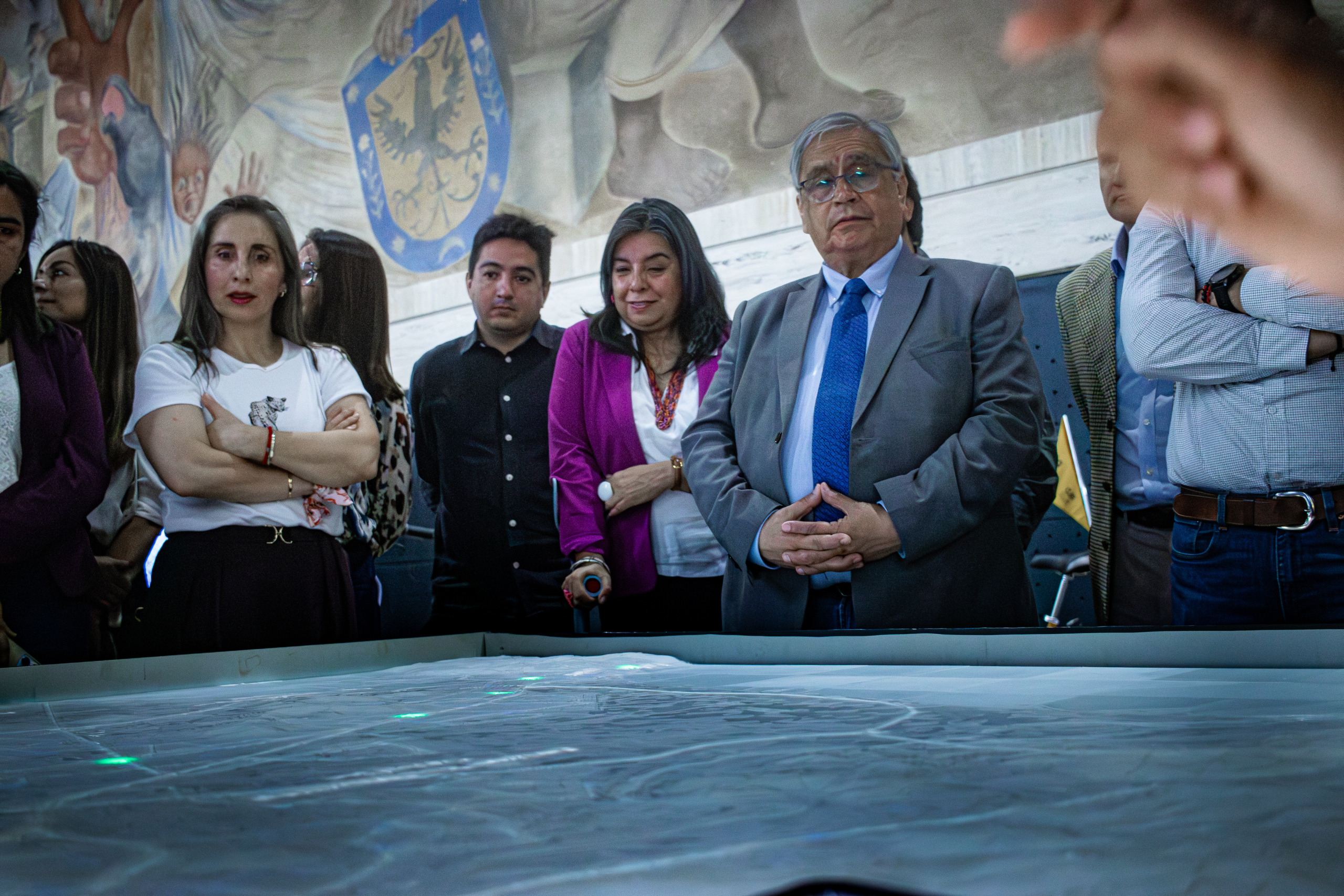
In what was once the waiting hall of Concepción’s Railway Station, now converted into the Gregorio de la Fuente Hall at the Regional Government headquarters, the latest Innovation Tour organized by the Biobío Chamber of Production and Commerce took place, this time in collaboration with City Lab Biobío.
This partnership made it possible to develop the theme “Smart Territories: Cities in Motion,” aimed at showcasing the technological capabilities of public institutions, private companies, and academic organizations working to drive innovation in the urban environment.
Marcela Angulo, executive director of CPC Biobío and president of its Innovation and SMEs Committee, said during the organization’s final event of the year that the region “has enormous potential. One of the goals of this Tour is to highlight the capabilities already in place, connect people working on these issues, and spark high-impact initiatives that can deliver greater benefits for the urban environment and improve quality of life for the region’s residents.
On this occasion, City Lab Biobío hosted the Tour, presenting the work and research carried out in its lab to support decision-making aimed at sustainable urban growth and expansion. One of the most prominent initiatives is “Ciudad Portuaria,” a platform developed together with Puertos de Talcahuano that simulates the impact of connectivity, mobility, and waterfront improvement projects.
The presentation also included a demonstration of simulation and visualization tools on the Metropolitan Scope platform for Greater Concepción.
“Los entornos de los establecimientos educacionales son uno de los puntos donde se concentran mayores conflictos de la movilidad durante la mañana. Con este piloto buscamos medir ese fenómeno y evaluar si con soluciones basadas en gestión y no en grandes obras de infraestructura podemos ayudar a disminuir atochamientos”, explica Fernando Pérez, director principal del City Lab Biobío.