

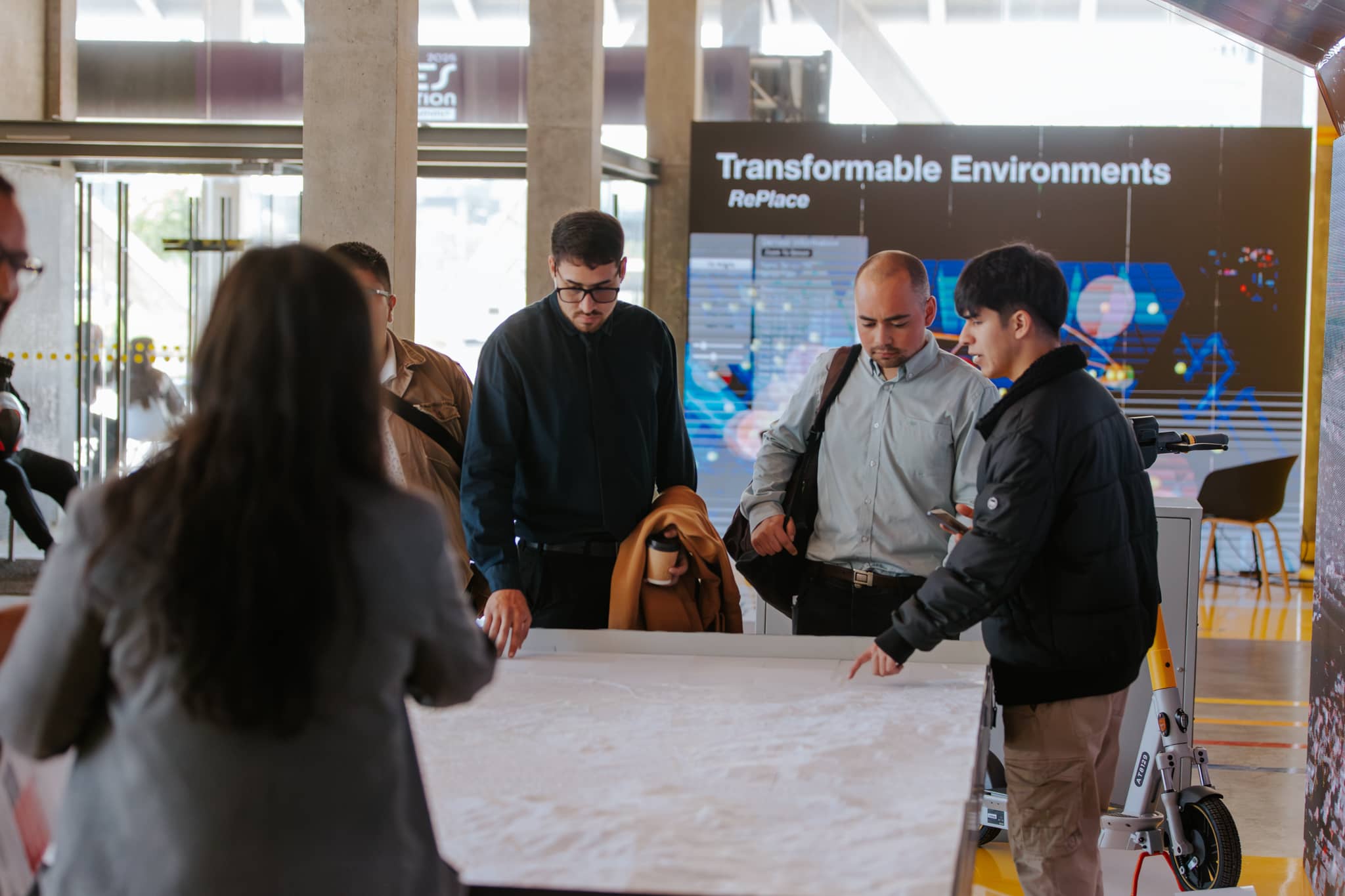
Andorra has a population of about 85,000 but receives nearly 8 million visitors each year. That experience, along with its approach to tourism management based on collecting, integrating, and projecting data, was one of the topics discussed at the Cities in Transition Summit, the annual meeting of the MIT City Science Network. The event, organized by City Lab Biobío, was held this year in Greater Concepción.
In addition to the presentations delivered by different city labs to their peers and to attendees during the open session at Teatro Biobío, this year’s annual meeting of the MIT network also included a collaborative effort in which labs from cities across the Americas, Europe, and Asia worked together on five urban challenges in Greater Concepción alongside City Lab Biobío.
Over several months, for example, researchers from the City Science Lab Andorra studied the potential of wine tourism routes in the Biobío Valley. During the Summit, they traveled to Santa Juana to share that analysis with the local community and to review the findings and future opportunities with other researchers from the MIT network.
“It’s important to understand what types of data are available. In Andorra, we work with mobile phone data, which can be complemented with contextual information, such as the online searches people make when choosing a destination, their movements within the city and how they travel, their purchases, and the places they visit more or less frequently. The real value emerges when all this data is combined, because it allows us to model the tourist cycle,” explains Jordi Ascenci, Head of Technology at the City Science Lab Andorra.
The City Science Lab Taipei also worked on this challenge, recommending the development of a territorial brand that highlights the origin of local products. The team also stressed the urgency of professionalizing data collection and using artificial intelligence not only to better understand tourists, but also to anticipate service gaps and new opportunities.
Together with the City Science Lab Shanghai, the Andorra lab also examined the urban challenge of preventing wildfires through technology-enabled grazing. The analysis explored options for community-led management using this approach in coordination with public authorities, the tensions between economic incentives and prevention efforts, and ways to make the model sustainable and scalable.
It also considered initiatives such as animal sponsorship campaigns to encourage greater public involvement.
City Labs from Hamburg, Gipuzkoa, and Guadalajara also examined urban challenges related to mobility, informal settlements, and food security. In the case of mobility, the teams explored alternatives to reduce car dependency and congestion in Greater Concepción, including incentives for modes such as walking, bicycles, or scooters as part of multimodal trips.
They also highlighted the need for more inclusive infrastructure and the digitalization of transport systems, with real-time updates to improve how people move around the city.
“One of the benefits of belonging to an urban lab network like the one at MIT is the ability to explore science- and data-based solutions to the concrete needs of city residents. It’s not only about generating models that anticipate the outcomes of different decisions, but also about drawing on the experience of other cities that have already faced similar challenges,” says Fernando Pérez, director of City Lab Biobío.
For Kent Larson, director of the MIT City Science Center, the Summit held in Greater Concepción “had a very special energy and enthusiasm from the people,” particularly highlighting City Lab Biobío’s decision to dedicate one of the days to an open event focused on innovation, technology, and the city.
“The next step is to think about how people can see the impact of the lab and, in the longer term, support the use of data in more transformative projects such as the Metropolitan Regulatory Plan. I believe City Lab Biobío could easily become an innovation hub in Chile, transferring ideas and methodologies to other cities and helping build a national innovation network with Biobío at its center,” said the internationally recognized architect.
During the Cities in Transition Summit, organizers also announced the location of the next annual meeting of the MIT city labs network: the city of San Sebastián, capital of the province of Gipuzkoa in Spain’s Basque Country.
“The major urban challenges we are analyzing will never be solved individually, nor by government, the private sector, or academia acting on their own. In Concepción, we saw those actors strongly represented, along with startups and the broader Biobío community. That was very encouraging, and we hope to replicate it next year,” said Zuriñe Varela, Scientific Director of the City Science Lab Gipuzkoa.
City Lab Biobío operates in Greater Concepción thanks to the support and funding of the Biobío Regional Government and the Chilean Chamber of Construction, with operations carried out by Corporación Ciudades.
The Cities in Transition Summit was also made possible through the collaboration of more than 50 companies and institutions, with Entel Digital and Grupo CAP Huachipato serving as the main sponsors.