

Reducing congestion in San Pedro de la Paz, improving the thermal performance of homes in informal settlements in Talcahuano, preventing wildfires in Santa Juana, strengthening wine tourism routes in the Biobío Valley, and enhancing food security in Concepción are the five urban challenges in Greater Concepción that City Lab Biobío has been working on this year with city science labs from Hamburg, Gipuzkoa, Andorra, Taipei, Shanghai, and Guadalajara, along with researchers from the MIT Media Lab.
All of them share a common focus on using innovation and technology to find practical solutions. They will also be part of the discussions at the “Cities in Transition” Summit, organized by City Lab Biobío and inaugurated this Tuesday by the Biobío Regional Government, the Chilean Chamber of Construction in Concepción, and Corporación Ciudades.
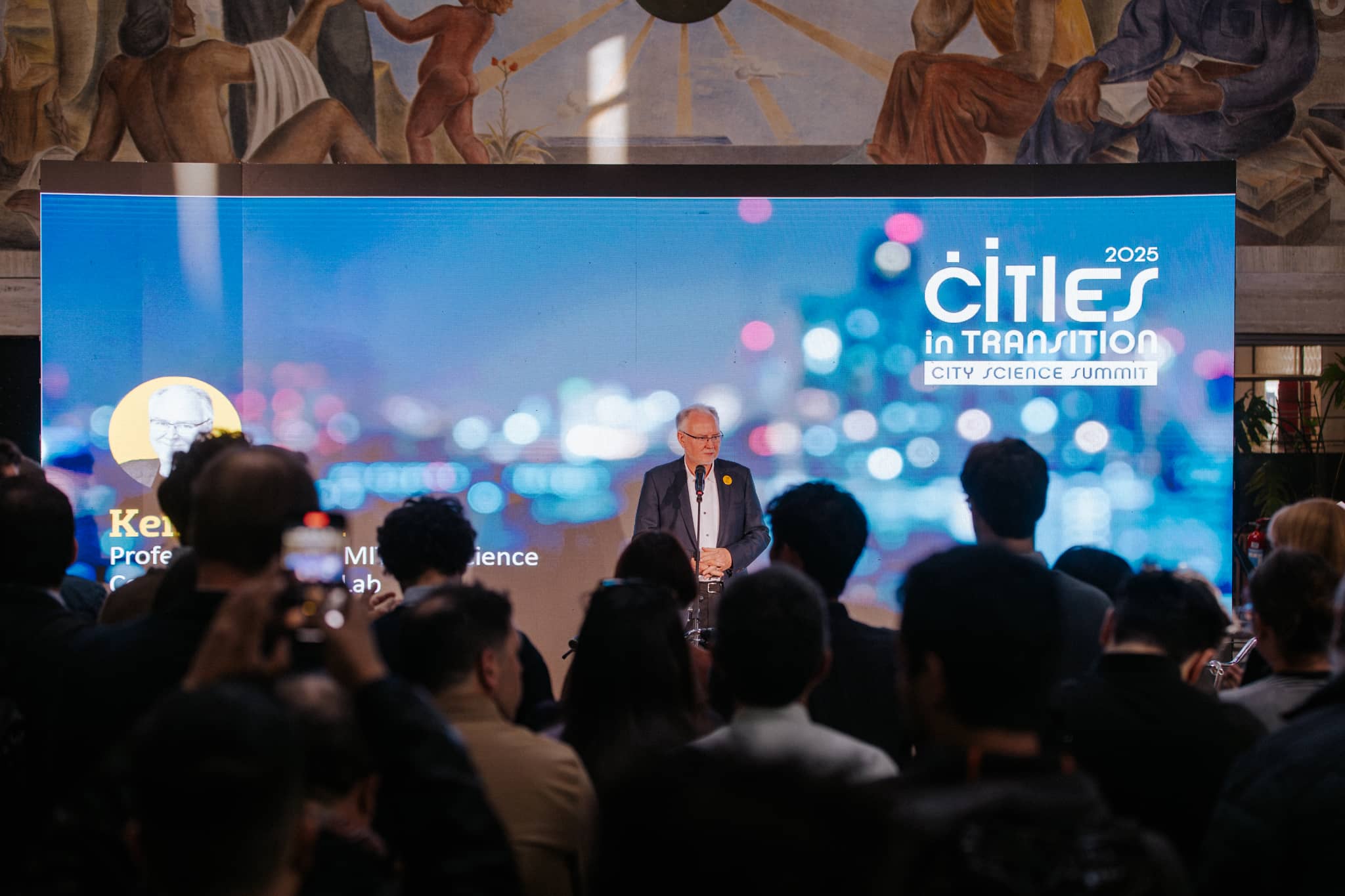
The opening session took place at the Mural Hall of the Regional Government headquarters, where researchers from the participating urban labs were welcomed. The technical teams then traveled to a series of workshops in Santa Juana, Talcahuano, and Concepción to continue working on the urban challenges addressed during the summit.
The results of that work will be reviewed next Thursday during the closing session, which will be held at the Innovation Building of the University of Bío-Bío.
“With the experience of nearly one hundred researchers from around the world, we can bring proven success stories, explore how they can be adapted to the local context, and ensure they have a positive impact on people’s quality of life,” explained Fernando Pérez, principal director of City Lab Biobío.
Along those lines, Kent Larson, director of the City Science group at the MIT Media Lab, noted that this is the ninth Summit organized by the network worldwide, but the first in South America “and the largest we’ve held so far. It’s an opportunity for our researchers from around the world to learn about the challenges facing cities like Concepción and others across Latin America, and to take those lessons back with them as they look for solutions.”
The main public day of the City Science network’s gathering will take place this Wednesday, October 8. Throughout the day, the Teatro Biobío will host a series of activities open to the community focused on urban innovation. Visitors will be able to attend artistic performances and exhibitions, meet startups and technology companies, and take part in talks that will also be streamed online. Participation, whether in person or online, is free, although attendees must register in advance at citylabbiobio.cl.
“Today we are connecting with the world,” said Jaime Aravena, acting regional governor of Biobío. “We hope the analyses carried out here will give us tools to make better decisions in the future and help build a better city for Biobío, which is the goal we share as a regional government.”
The event at Teatro Biobío will feature international speakers such as Kristian Norelius, art director at Pixar Animation Studios, and Amy Allen, a set design supervisor at the studio, who will share their experience creating environments for films such as “Coco,” “Inside Out,” “Wall-E,” and “Toy Story 3.” The program will also include Kent Larson, director of the City Science group at the MIT Media Lab and a global reference in the design of smart cities.
Jorge Coloma, president of the Chilean Chamber of Construction in Concepción, highlighted the work of City Lab Biobío and the potential of using today’s technologies to improve urban decision-making. “We are working to incorporate these tools into both metropolitan and municipal regulatory plans. This is an enormous opportunity to learn from researchers coming from cities similar to Greater Concepción,” he said.
Meanwhile, Martín Andrade, executive director of Corporación Ciudades, stressed that “what we often need is to think not only from what we feel, believe, or hear, but to rely on data and science. Rather than just talking about smart cities, we should be talking about smart citizens.”
City Lab Biobío operates in Greater Concepción thanks to the support and funding of the Biobío Regional Government and the Chilean Chamber of Construction, with operations carried out by Corporación Ciudades. It also receives strategic support from the University of Concepción, the University of Bío-Bío, and Universidad del Desarrollo, along with partnerships with public institutions and private companies.
The Cities in Transition Summit is also supported by Grupo CAP-Huachipato and Entel Digital as main sponsors, along with the collaboration of Essbio, Whoosh, Casa Diseño, MDS Hoteles, Inacap, and the universities Santo Tomás, del Desarrollo, and Andrés Bello.