

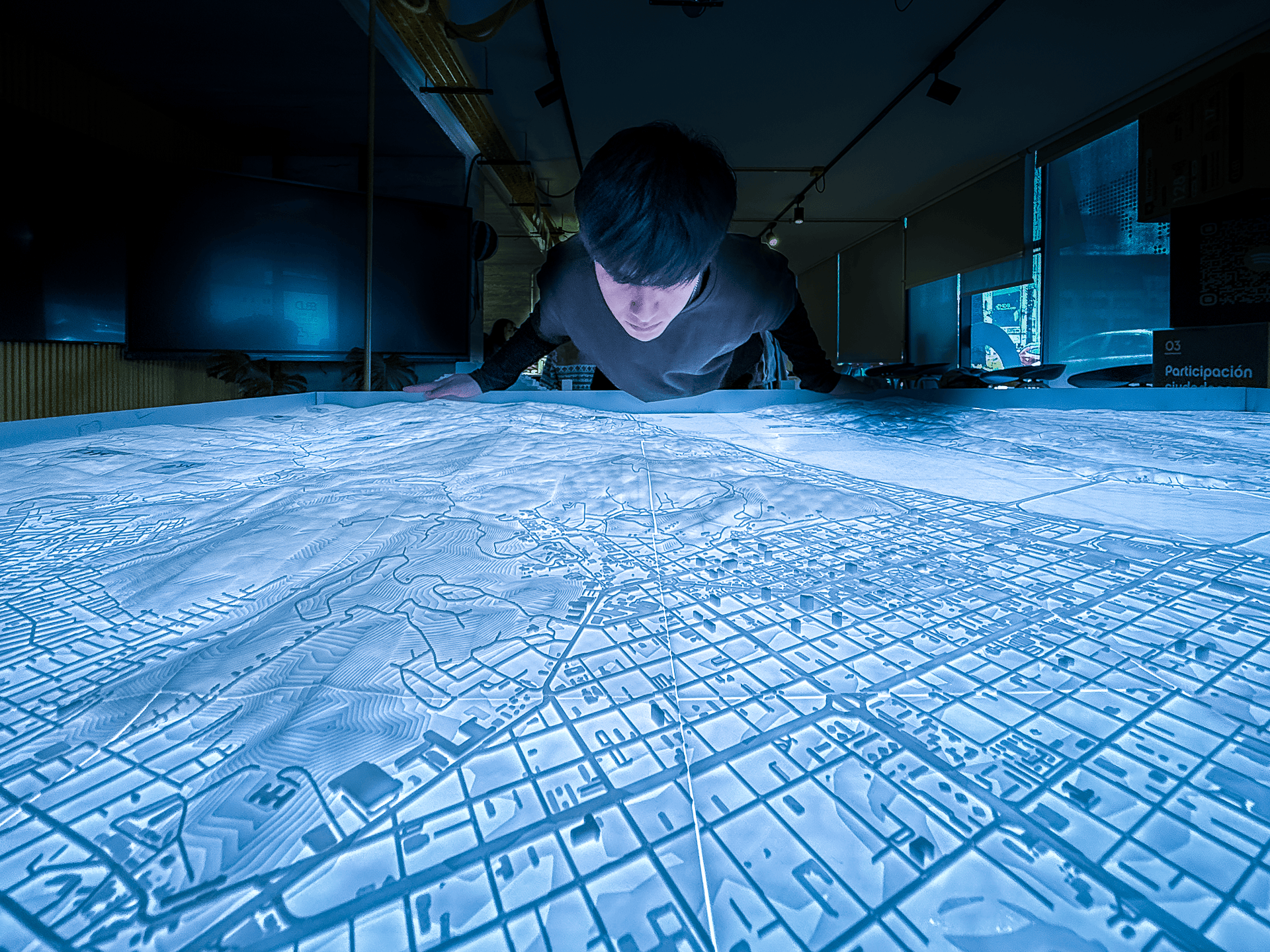
Between Oct. 7 and 9, Greater Concepción will become the global epicenter of urban innovation and city science. For the first time in the Southern Hemisphere, the annual gathering of the urban laboratory network of the Massachusetts Institute of Technology will take place in Chile, led locally by City Lab Biobío.
Researchers, urban planners and professionals from nine countries will convene at the Cities in Transition Summit to reflect on the cities of the future and review concrete urban initiatives grounded in innovation, data use and global scientific collaboration with a local focus.
For Concepción residents, the main event will be Oct. 8 at the Teatro Biobío, which will host a full day of exhibitions, panel discussions, artistic performances, experience-sharing with other city science labs from the network, and interactive booths from technology companies, universities and startups. Registration is open at citylabbiobio.cl.
The Cities in Transition Summit is organized by City Lab Biobío in cooperation with the Regional Government of Biobío, the Chilean Chamber of Construction and Corporación Ciudades. The event has the support of more than 50 institutions and companies, with Entel Digital and Grupo CAP Huachipato as the principal sponsors — a sign of the private sector’s growing interest in urban planning and development.
“We want to open a space where people can connect with fresh ideas and imagine what the cities of the future will look like, drawing on the technology and science available today so that it translates into our neighborhoods, parks and streets — for the enjoyment of everyone,” said Fernando Pérez, principal director of City Lab Biobío.
The Oct. 8 program will feature Kent Larson, director of the City Science group at MIT Media Lab, internationally recognized for his contributions to smart city design. Also appearing will be Kristian Norelius, art director at Pixar Animation Studios, and Amy Allen, the studio’s sets design supervisor, who will discuss how the animated worlds in films such as “Coco,” “Inside Out” and “WALL-E” are created.
Pérez said the Pixar component was designed to draw a broader audience that included children. “We asked ourselves how a child approaches the city, how they understand an idealized urban environment — and that connected directly with the work Pixar does to interpret that vision,” the architect said.
Innovation with a Local Identity
On Tuesday, Oct. 7, researchers from the various laboratories will have a full working day. Split into five groups alongside higher education institutions, companies and public and private organizations, they will travel to Santa Juana, Talcahuano and Concepción to address five urban challenges that have been analyzed throughout the year through remote collaboration and pilot projects.
Those challenges are: studying thermal comfort in informal settlements, in coordination with the City Lab in Hamburg; modeling mobility scenarios in San Pedro de La Paz, in partnership with the City Lab in Gipuzkoa; developing AI-enhanced wine tourism routes in the Biobío Valley, together with labs in Taipei and Andorra; preventing wildfires through technology-assisted grazing to reduce fire-prone vegetation, in coordination with researchers in Shanghai, Andorra and Boston; and promoting urban food security, in coordination with teams in Guadalajara.
“Having Biobío host a scientific gathering of this caliber is a major opportunity. This event will allow us to learn from world-class cities while also drawing them into the search for solutions for our region,” said Sergio Giacaman, governor of the Biobío Region.
“Este intercambio nos permitirá aprender de sus experiencias y entender que los desafíos que vivimos acá también se viven en otras ciudades del mundo”, complementa Bernardo Suazo, past president de la Cámara Chilena de la Construcción de Concepción.
The event’s name — “cities in transition” — refers to the speed at which science and technology are transforming the way people inhabit their territories. According to Patricio Donoso, chairman of the board of Corporación Ciudades, the Summit will embody that spirit and “invite all of us to reflect, think and dream about Greater Concepción. From its origins, this city has been built collectively — and that must remain true going forward.”