

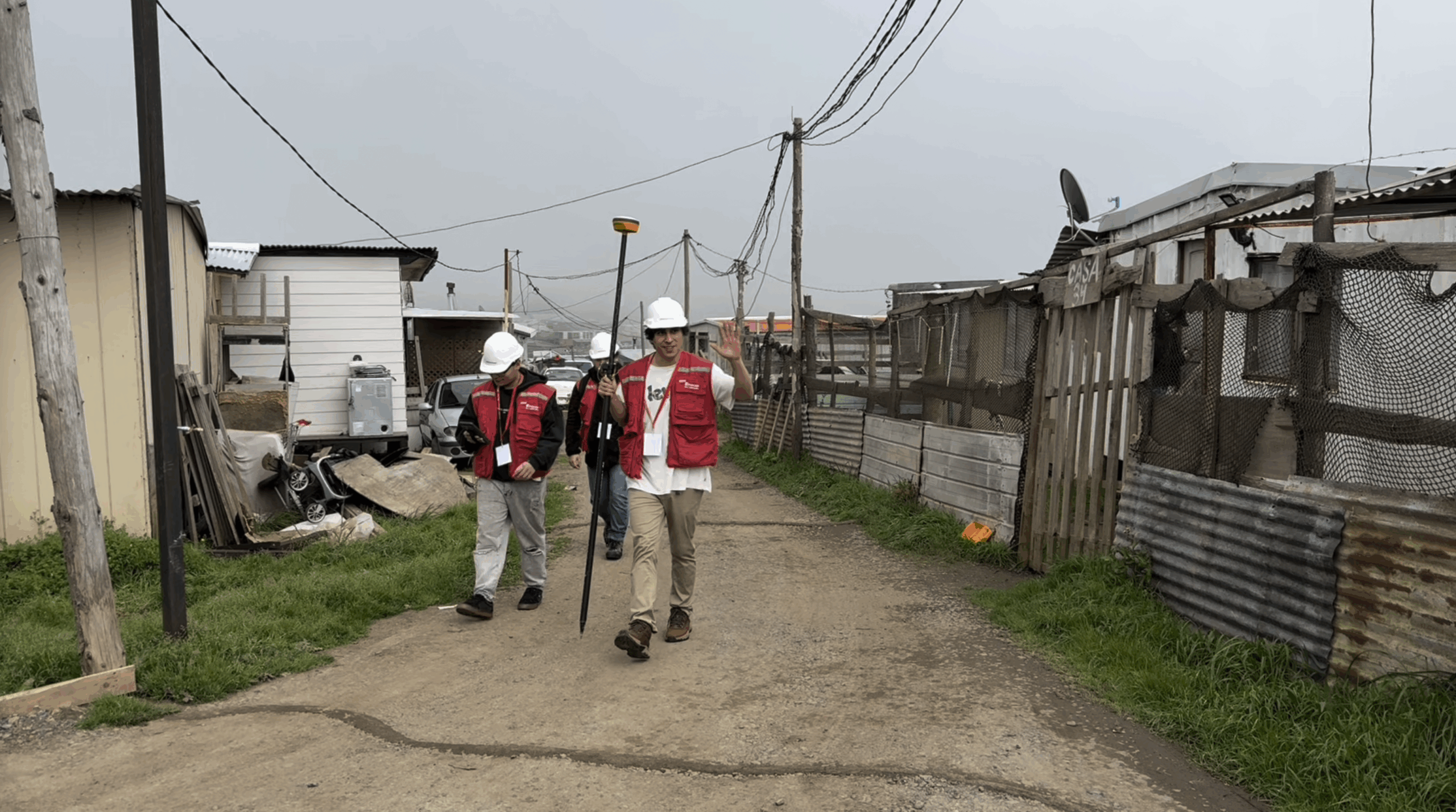
The city laboratory City Lab Biobío is developing a pilot project that seeks to diagnose the encampments of the Biobío Region. The objective is to develop a tool that generates inputs for decision making by the State or private organizations for emergency interventions or aid for the transfer of families to permanent housing.
This initiative is part of the scientific challenges promoted by the science laboratory, whose first results will be presented during the global meeting on city science, called “Summit Cities in Transition”, between October 7 and 9, which will bring together researchers from Europe, Asia, the United States, Canada and Latin America.
Together with researchers from MIT City Science and the City Science Lab in Hamburg and the Techo-Chile Foundation team, the City Lab Biobío team is studying the dynamics of informal settlements in Gran Concepción through the construction and validation of multiscale data sets aimed at modeling the thermal comfort of self-built dwellings.
For this purpose, data from georeferenced aerial photogrammetric flights were used – in alliance with academics and students from Inacap in the region – where the Hamburg researchers applied their BEAM model to obtain the polygons of the built-up area. In addition, with in situ temperature records of the homes of the families living in the La Unión II camp on Centinela hill in Talcahuano, supervised machine learning models will be trained to correlate morphological and spatial variables with thermal performance indicators.
The purpose is to develop a tool applicable to camp diagnostics that will help prioritize where modernization efforts or emergency interventions should be focused. “This development, successfully implemented in Hamburg and other cities around the world, reflects the essence of city science labs: collaboration. When different actors work together to address a country’s social challenges, what is at stake is the concrete improvement of people’s quality of life. It is not only about producing data or reports that remain on file, but about generating applied and action-oriented knowledge”, says Fernando Pérez, main director of City Lab Biobío and of the event, which also has the support of the private sector through companies such as Grupo Cap-Huachipato and Entel Digital.
The Biobío region is the region with the second largest number of camps at the national level, according to TECHO-Chile’s latest National Cadastre of Camps, with more than 11 thousand families living in the 228 informal settlements registered. On the other hand, according to the Institute of Urban Studies of the Catholic University, families living in this situation take between 10 to 15 years to obtain a housing solution through the subsidy policy.
About the lab
City Lab Biobío is a city science laboratory — the only one in Chile and the southernmost in the world. Through a partnership between the Regional Government of Biobío and the Chilean Chamber of Construction, under the leadership of Corporación Ciudades, the applied research lab has achieved notable milestones within MIT City Science’s global network of city science laboratories.