

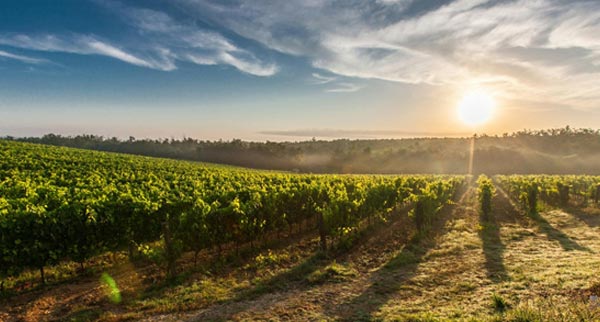
Managing tourism across the century-old vineyards of Biobío and using simulations to highlight hidden gems and undervisited areas is the focus of researchers at City Lab Biobío, who, with support from scientists in Taipei and Andorra, are developing an artificial intelligence-driven model to simulate tourist routes and boost the wine industry in the region.
The underlying technology — an agent-based model already tested in Taiwan — will allow municipalities in the Biobío valley to use artificial intelligence to simulate which destinations potential tourists arriving in the region might visit as they explore and sample its centuries-old wines.
“Through this model, and by combining the full range of data held by City Lab Biobío, we will be able to understand in detail the actual behaviour of visitors — which places they go to according to their sociodemographic profile, how long they spend at each attraction, and whether their route reveals gaps in services such as restaurants, hotels and points of sale. It is an excellent tool for anticipating needs and preparing municipalities and localities such as San Rosendo, Laja, Santa Juana and Yumbel as a tourist destination,” said Fernando Pérez, executive director of City Lab Biobío.
Simulation results could also be used to highlight hidden gems or balance the tourism offer across municipalities through targeted campaigns that distribute the benefits of tourism more evenly. The agents — programmed units based on sociodemographic profiles — are deployed across a predetermined map, covering every square metre in search of the best tourist experience according to their profile.
In a single simulation run, multiple agents with different profiles would “travel” to the Biobío valley, and at the end the simulation indicates what the agents did, where they went, what they consumed and what they found missing.
“Ideally, this technology allows you to visualise how many rooms might be needed, how well-stocked small businesses should be, how many diners restaurants can handle, and which points of interest are more or less visited — all displayed on a dashboard that can be used by tourism operators and municipalities to better manage and balance tourist overcrowding in small towns,” said Diego Ramírez, the laboratory’s data science lead.
The findings from this challenge and others will be presented in October at the MIT global city science summit. The Cities in Transition Summit will bring together researchers from Europe, Asia, the United States, Canada and Latin America.
City Lab Biobío operates in Greater Concepción through the funding and support of the Regional Government of Biobío and the Chilean Chamber of Construction, with Corporación Ciudades managing its day-to-day operations. The laboratory also receives strategic support from the Universidad de Concepción, Universidad del Bío-Bío and Universidad del Desarrollo, along with partnerships with private companies and public entities.