
In order to foresee the impacts on mobility generated by new urban interventions on people’s modes of travel, the urban laboratory City Lab Biobío is working on a simulator that will make it possible to project and visualize how a city can benefit by anticipating the travel needs of a community and positively impact its quality of life.
This development is part of the scientific challenges promoted by the science laboratory, the results of which will be presented during the MIT global city science meeting, called “Summit Cities in Transition”, between October 7 and 9, which will bring together more than one hundred researchers from Europe, Asia, the United States, Canada and Latin America.
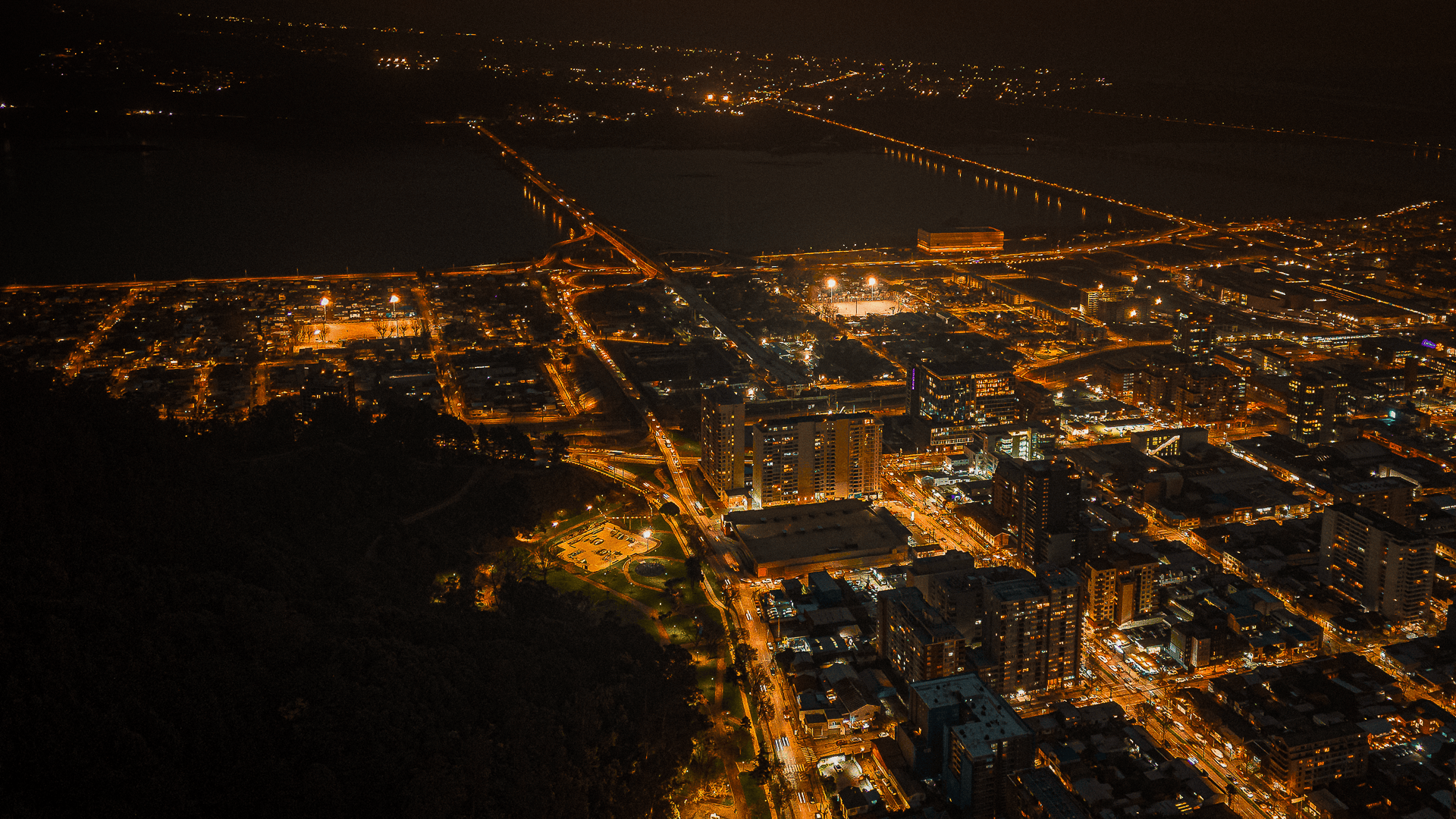
The challenge – whose model for choosing mobility modes is a technology recently applied by the city science laboratory in Gipuzkoa, Spain – arises from the high rates of traffic congestion faced by the region. One of the most critical cases is in San Pedro de la Paz, particularly on Route 160, where 75% of residents lose between one and two hours a day due to traffic jams.
Specifically, the researchers from the Basque Country were able to simulate what happens when people modify their travel modes when there are variations in the urban equipment of the city. This is developed from the Mobility Choices Mode tool -a machine learning model that predicts the mode of transport chosen by a person according to their profile and the available supply-, which will allow the laboratory to evaluate changes in some variables in travel, mainly the origins and destinations of people.
“It is essential to understand that the use of city science can enable the design of better cities, always with a focus on anticipating scenarios. Our region, particularly, lives a complex situation in terms of mobility modes and this platform can be a support in decision making,” says Fernando Perez, principal director of the laboratory.
The simulator generates dynamic models on the reallocation of travel modes of citizens after the implementation of projects, thus providing accurate data for planning and calculating who will benefit most from mobility interventions, favoring the prioritization of investments that improve access for the most vulnerable sectors and regular users of public transport.
“The studies carried out for the region of Gipuzkoa showed the environmental benefits of reinforcing public transport, promoting co-working spaces to bring the workplace closer to residential areas and applying other mobility policies. And this transcends to other spaces as well, allowing guidance in decision making, such as establishing new metro or bus lines, enabling exclusive public transport lanes or creating new infrastructures, in order to reduce car dependency, vehicle congestion and reduce emissions,” explains Zuriñe Varela, scientific director of the City Science Lab of Gipuzkoa.
During the working days of the Summit, researchers will travel through the center of Concepción in different modes of travel, where they will be able to see in situ road conditions, infrastructure, availability of public and private transportation, obtaining geo-referenced data and heat maps of how different profiles of citizens experience daily mobility in Concepción. The conclusions of the scientific challenge will be presented at the closing of the Summit 2025 – which also has the support of the private sector through companies such as Grupo Cap-Huachipato and Entel Digital-, at the Biobío Theater.
About the laboratory
City Lab Biobío is a city science laboratory — the only one in Chile and the southernmost in the world. Through a partnership between the Regional Government of Biobío and the Chilean Chamber of Construction, under the leadership of Corporación Ciudades, the applied research lab has achieved notable milestones within MIT City Science’s global network of city science laboratories.