

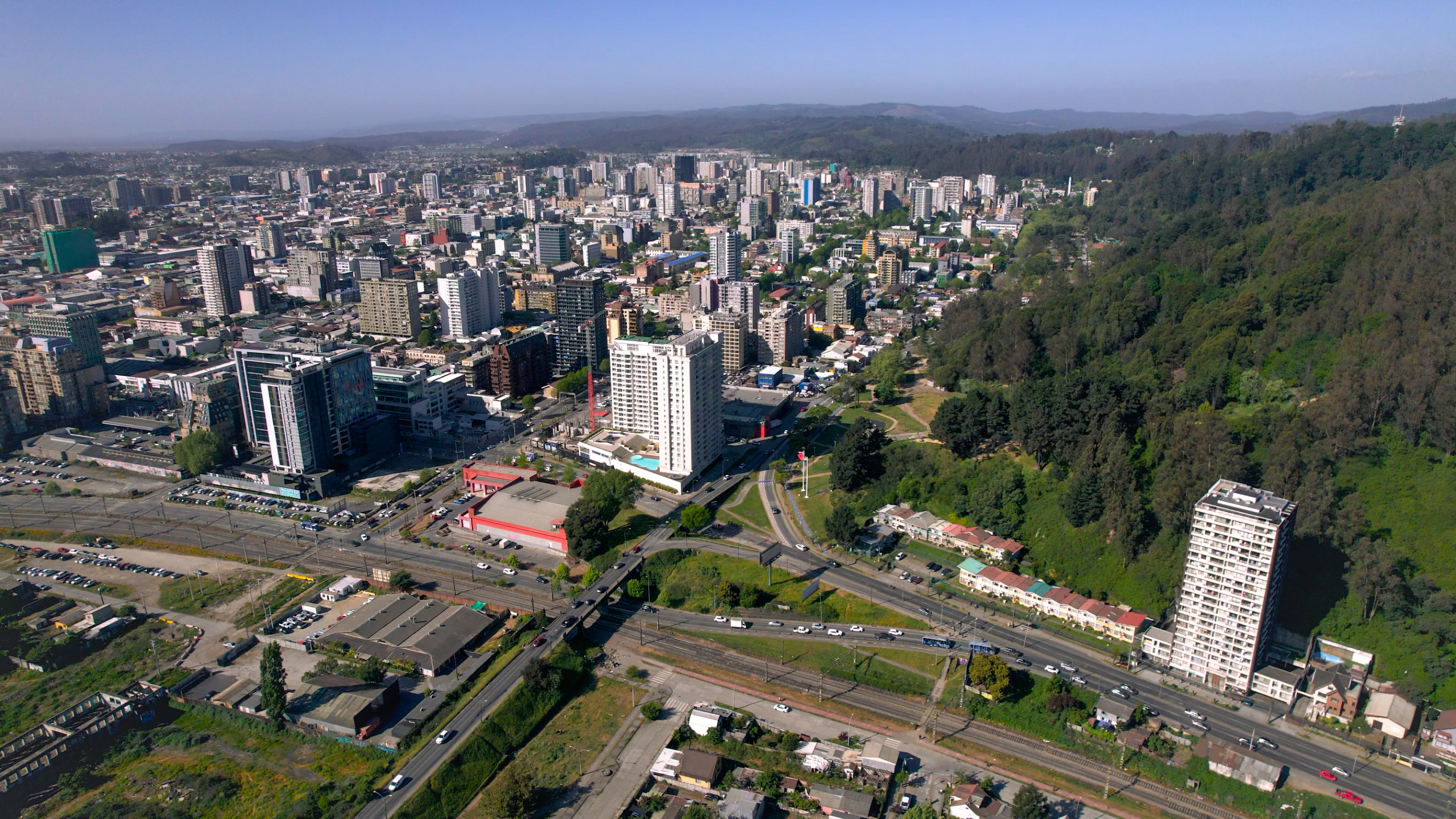
Urgent. That is how the Regional Ministerial Secretary of Housing and Urban Planning, Claudia Toledo, characterised the task of creating and defining the target vision for Greater Concepción’s planning instrument — because the Metropolitan Regulatory Plan currently in force dates from 2003, and the macro-urban area of the province has changed dramatically since then.
Drawing together the public sector, private sector actors, academia, social organisations and residents of Greater Concepción, the second Forum launched the validation stage of the target vision — a step described as key to “defining a shared vision for the development of the Concepción metropolitan area, with particular focus on planning objectives across five thematic pillars.”
Marcela Martínez, directora de estudios del laboratorio, indicó que “el City Lab es parte de un ecosistema de entidades que estudian la ciudad. Cada uno de ellos con un enfoque en particular, y el de nosotros es anticipar el futuro de las zonas de estudio que estamos abordando, como lo son el Sector Costanera de Concepción, la dimensión de transporte y movilidad para San Pedro de La Paz y la interacción ciudad – puerto en Talcahuano. Sumarnos a este encuentro reviste una oportunidad para contribuir al diálogo junto con otros actores sobre el futuro de nuestra área metropolitana, bajo el enfoque de la ciencia de ciudad que estamos desarrollando en cooperación con el MIT Media Lab”.
In concrete terms, the target vision brings together the shared aspirations of all residents across the municipalities of Concepción, Chiguayante, Hualpén, Talcahuano, Hualqui, San Pedro de la Paz, Coronel, Lota, Penco, Tomé and Santa Juana. Florida is currently being assessed for possible inclusion in the Metropolitan Regulatory Plan. The five pillars underpinning this shared metropolitan vision are Mobility, Industry and Infrastructure, Environment and Risk, Social Integration and Rural Territory.
“These are major issues that are debated and discussed separately, but which will at some point converge in this target vision. It will be a challenge for our city science laboratory to use this document — once formalised — as a framework for data visualisations, projects and future scenarios,” added Helen de la Fuente, data and GIS manager at City Lab Biobío.
The next steps in the elaboration of the Metropolitan Regulatory Plan are a series of municipal workshops that will open the debate to all residents of Greater Concepción.
More information in imagenobjetivoprmc.cl