

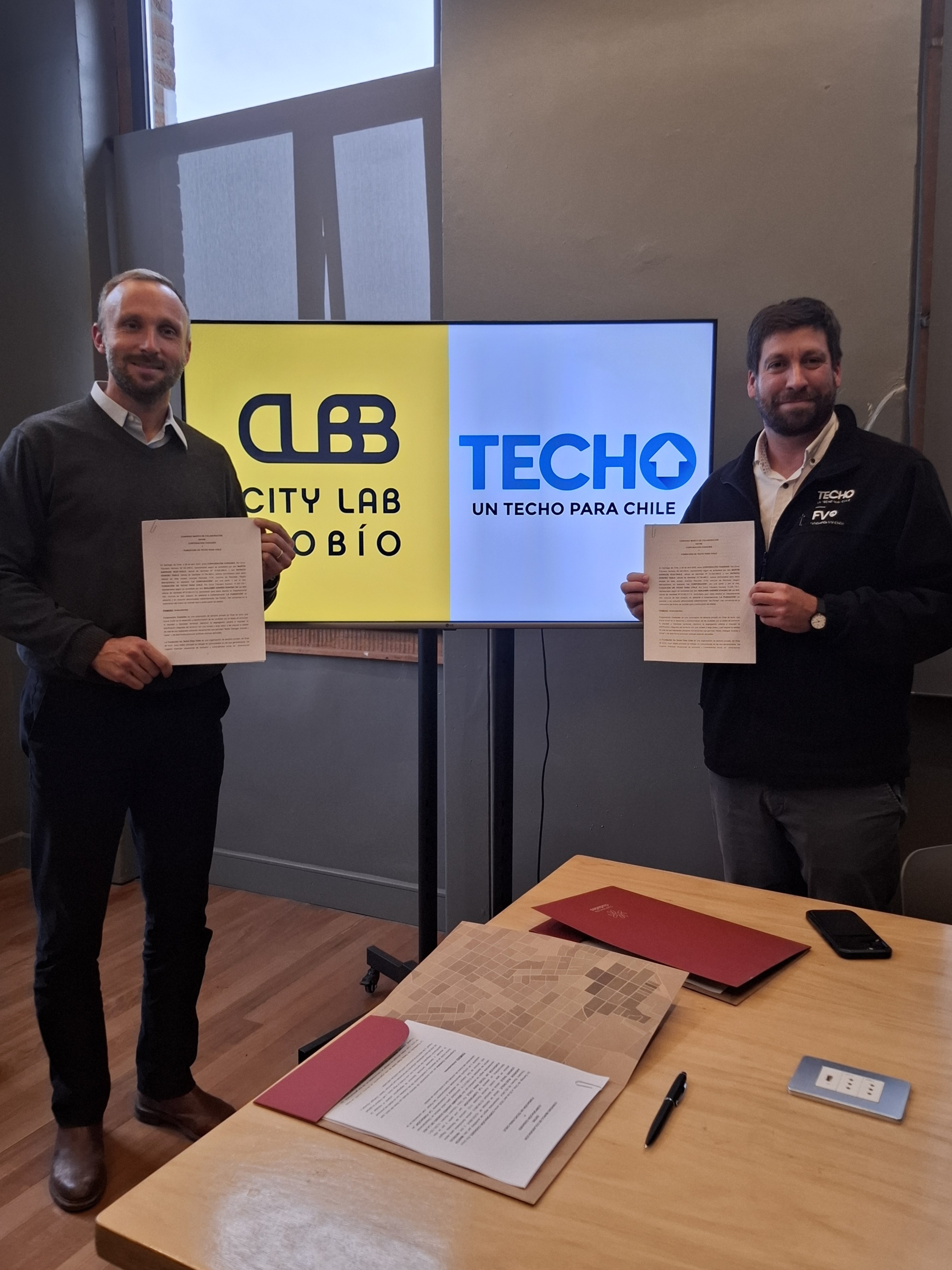
Studying the dynamics of informal settlements across Greater Concepción is the primary objective of a collaboration agreement signed by City Lab Biobío, the first city science laboratory in the MIT City Science network, and TECHO-Chile, Latin America’s leading organisation in informal settlement intervention and volunteering.
The collaboration will study heat and cold conditions inside dwellings in informal settlements, using technologies developed alongside experts from MIT City Science network laboratories in Hamburg and Israel. The goal is to create the first globally validated dataset on thermal conditions in informal settlement contexts, cross-referenced with aerial and satellite imagery.
“This represents an important step in linking science and technology with real social challenges. Those thousands of families living in informal settlements are also part of the city, and we therefore have a responsibility to care about their quality of life,” said Fernando Pérez, principal director of City Lab Biobío, who highlighted the knowledge that will be generated in partnership with TECHO-Chile.
The agreement takes on particular significance in the wake of TECHO-Chile’s 2024-2025 Informal Settlement Survey, which revealed a rise in the number of informal settlements across the country, from 1,290 to 1,428, and in the number of resident families, from 113,887 to 120,584.
Benjamín Donoso, chaplain at TECHO, welcomed the signing of the collaboration agreement and the prospect of being present at the upcoming MIT urban laboratory network summit in Concepción in October. “The City Lab Biobío initiative in the region is very interesting because it allows technology and data visualisation to be used for the common good, highlighting the needs of different communities and urban areas in order to build just, humane and inclusive cities,” said Donoso.